How to Avoid Overheating with Smart Facade Systems: A Definitive Guide
The modern building envelope has transitioned from a passive barrier to a responsive, biological-like membrane. This evolution, while promising unprecedented energy efficiency, introduces a paradoxical challenge: the very systems designed to manage light and heat can, if poorly calibrated or integrated, exacerbate thermal gain. The thermal mass of glass-heavy architecture, combined with the latency of mechanical response systems, creates a volatile environment where “smart” features can inadvertently trap heat, leading to occupant discomfort and excessive cooling loads.
Solving for thermal stability in high-performance buildings requires more than just installing automated louvers or electrochromic glass. It demands a systemic understanding of solar geometry, convective heat transfer, and the digital logic that governs these movements. When we discuss the intricacies of temperature regulation in responsive architecture, we are essentially discussing the management of energy flows in real-time. A failure in the logic of a smart facade is not merely a software glitch; it is a physical event that manifests as a localized greenhouse effect.
This article examines the structural, mechanical, and algorithmic strategies necessary to maintain climate equilibrium. We will look beyond the surface-level marketing of “smart” materials to explore the underlying physics of thermal radiation and the rigorous governance required to keep these systems functioning as intended. The goal is to provide a technical and conceptual foundation for architects, engineers, and facility managers who must navigate the fine line between maximizing natural light and preventing thermal runaway.
Understanding “how to avoid overheating with smart facade systems.”
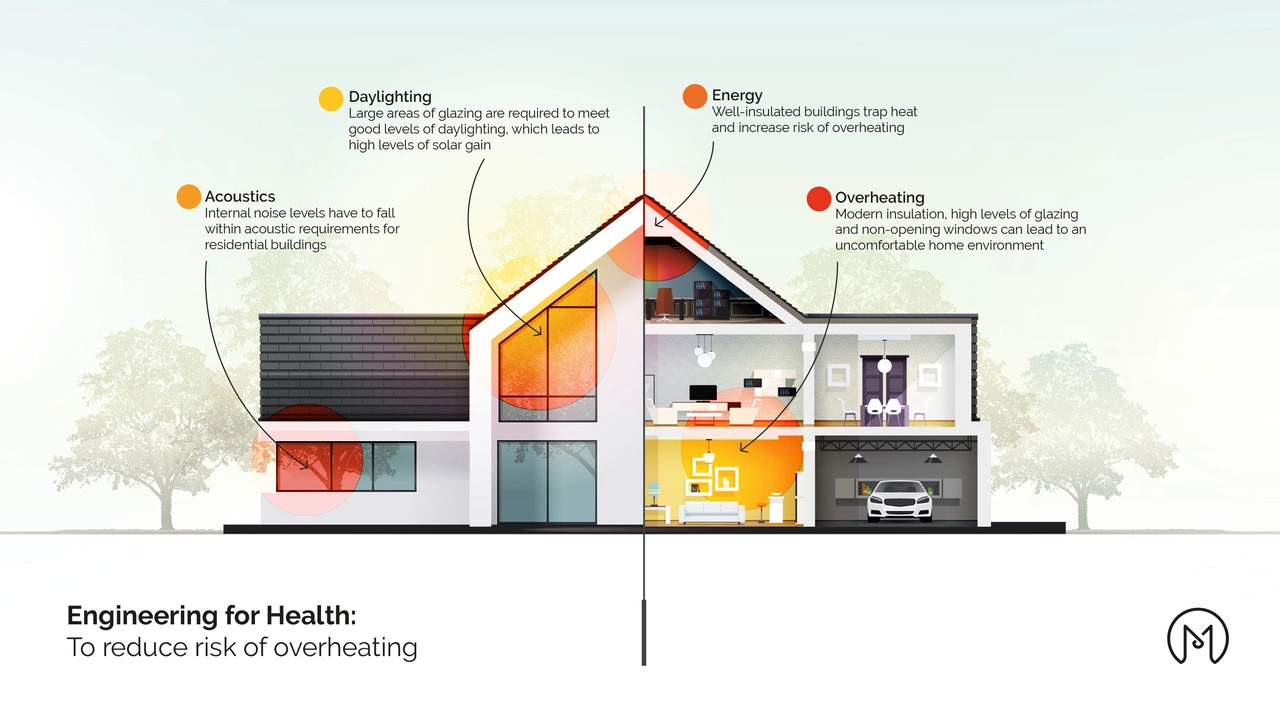
To effectively address how to avoid overheating with smart facade systems, one must first dismantle the assumption that automation is synonymous with optimization. A smart facade is a tool, not a solution in itself. Overheating often occurs not because the technology fails, but because the system’s “intelligence” is tuned to a narrow set of parameters—such as visible light transmission—while ignoring the infrared spectrum or the secondary heat re-radiation from the facade elements themselves.
The complexity of heat avoidance lies in the interaction between the facade and the Building Management System (BMS). A common misunderstanding is that shading devices should only deploy when a room feels hot. In reality, once the interior temperature has risen, the thermal inertia of the building’s core makes cooling significantly more energy-intensive. Preventing overheating is a predictive exercise, not a reactive one. It involves calculating the “incident solar radiation” hours before it hits the glass and adjusting the envelope’s porosity accordingly.
Furthermore, the risk of oversimplification exists in the reliance on “all-in-one” glass solutions. While electrochromic or thermochromic materials are effective, they can reach high surface temperatures during the tinting process. If these panes are not decoupled from the interior through proper thermal breaks or ventilated cavities, the glass itself becomes a radiant heater. Managing this requires a multi-layered perspective that balances the physics of conduction, convection, and radiation against the digital logic of the control network.
Historical Context: From Static Insulation to Dynamic Control
Architecture has spent centuries trying to solve the problem of the “leaky” envelope. The transition from heavy masonry—which used sheer mass to dampen temperature swings—to the lightweight curtain walls of the 20th century created a reliance on massive HVAC systems to counteract solar gain. The “Smart Facade” emerged as a response to the energy crises of the 1970s and the subsequent drive for sustainable development, seeking to regain the thermal control of masonry without losing the transparency of glass.
Early iterations were purely mechanical, such as manually operated external blinds. The 1990s saw the introduction of computerized “sun-tracking” louvers, but these were often plagued by “hunting”—a phenomenon where the system constantly adjusts to minor cloud cover, wearing out motors and distracting occupants. Today’s systems are far more sophisticated, incorporating neural networks and real-time weather data, yet the fundamental problem remains: glass is a thermal liability that requires active management to prevent the interior from becoming a solar furnace.
Conceptual Frameworks for Thermal Regulation
To navigate the design of a responsive envelope, several mental models are essential:
-
The “Time-Lag” Framework: This model focuses on the thermal inertia of materials. It posits that the goal of a smart facade is to delay the heat peak of the afternoon until the external air temperature has dropped, allowing for natural “night purging.”
-
The “Selective Transparency” Model: This suggests that a facade should not be viewed as open or closed, but as a filter. It must be capable of blocking the Near-Infrared (NIR) spectrum while allowing Visible Light (VIS).
-
The “Cavity Dynamics” Framework: Used primarily for double-skin facades, this model treats the air gap between glass layers as a dynamic lung. Understanding how to vary the “stack effect” within this cavity is crucial to removing heat before it enters the building’s thermal envelope.
Categories of Smart Facade Technologies and Thermal Trade-offs
Choosing the right technology requires a deep understanding of the inherent trade-offs between light, heat, and mechanical complexity.
| Technology Type | Mechanism of Control | Thermal Benefit | Primary Trade-off |
| Electrochromic Glass | Electrical pulse changes ion density | High NIR rejection; no moving parts | Surface heat buildup on glass |
| Automated Louvers | Mechanical rotation via actuators | Excellent external heat rejection | High maintenance; obstructed views |
| Hydrogel Interlayers | Temperature-sensitive phase change | Autonomous response (no power) | Limited manual override; cloudiness |
| Double Skin (DSF) | Controlled air cavity ventilation | Excellent acoustic and thermal buffer | Significant floor space loss; high cost |
| Closed Cavity (CCF) | Pressurized dry air with blinds | Zero dust/moisture; high precision | Requires constant air pressure systems |
Decision Logic for Heat Mitigation
When determining how to avoid overheating with smart facade systems, the logic should follow a hierarchy of intervention. External shading is always more effective than internal or “in-pane” shading because it stops the radiation before it penetrates the thermal barrier. However, in high-wind environments, external louvers may be retracted for safety, rendering them useless during a heatwave. In such cases, a hybrid approach—combining electrochromic glass with a ventilated cavity—provides the most resilient defense.
Real-World Scenarios and Failure Modes
Scenario 1: The “Canyon Effect” in Urban Centers
A glass tower with a smart facade is surrounded by other glass buildings. The sensors on the North side detect low sun, keeping the glass clear. However, reflections from the neighboring building’s South-facing facade blast the North side with concentrated radiation.
-
Constraint: Sensors were only programmed for direct solar paths.
-
Failure Mode: The localized “hot spot” caused a server room behind the glass to overheat, triggering a shutdown.
Scenario 2: The “Blind Spot” of Static Logic
A building uses a “schedule-based” shading system rather than a “sensor-based” one. On an unusually warm winter day, the sun sits low, but because the calendar says “January,” the system keeps the shades up to maximize solar gain.
-
Result: The building overheats despite the cold external air, requiring the chillers to run in the middle of winter.
Scenario 3: Mechanical Latency during “Rapid Sky” Events
On a day with fast-moving cumulus clouds, the smart louvers are in constant motion. To preserve motor life, the facility manager increases the “deadband” (the threshold for movement).
-
Second-Order Effect: The delay in response allows several minutes of peak solar gain into the atrium every hour, cumulatively overwhelming the HVAC system by mid-afternoon.
Economic Dynamics: Costs, Resources, and Long-term Value
The investment in smart facades is often justified by the reduction in HVAC “peak sizing.” If a facade can reliably prevent overheating, the mechanical plant can be smaller, saving significant capital.
| Investment Tier | Initial Cost (per m²) | OpEx Implications | Estimated ROI Period |
| Basic Automated Blinds | $200 – $400 | Moderate maintenance | 7-10 Years |
| Electrochromic Tinting | $500 – $900 | Low maintenance; high sensor cost | 12-15 Years |
| Active Double-Skin | $1,200 – $2,500 | High maintenance; high energy savings | 15-20+ Years |
Opportunity Cost: The greatest cost is often the “tenant turnover” associated with thermal discomfort. A building that cannot manage its heat gain becomes a “sick building,” leading to lower lease rates and higher vacancies, which far outweigh the initial cost of a sophisticated facade.
Tools and Predictive Strategies for Heat Mitigation
To effectively implement a strategy on how to avoid overheating with smart facade systems, developers should utilize these advanced tools:
-
Computational Fluid Dynamics (CFD): Modeling how air moves within facade cavities to ensure heat is actually being exhausted.
-
Model Predictive Control (MPC): Algorithms that use weather forecasts to “pre-cool” or “pre-shade” a building.
-
Solar Path Analytics: Precision mapping of shade and reflection from surrounding urban geometry.
-
Incident Radiation Sensors: Measuring W/m² directly on the glass surface rather than relying on rooftop ambient light sensors.
-
Thermal Imaging Drones: Periodic audits to identify “thermal bridges” or malfunctioning glass panes that aren’t tinting correctly.
Risk Landscape: Compounding Factors in Thermal Failure
Overheating is rarely caused by a single point of failure. It is typically a “compounding event.” For example, a sensor might fail (Tier 1), which causes the shading to stay retracted. This happens during a peak heatwave (Tier 2), and because the building has a high “Window-to-Wall Ratio” (Tier 3), the interior temperature rises 10 degrees in an hour.
The risk is further compounded by “Digital Fragility.” If the software governing the facade loses its connection to the internet or the local network, what is the “fail-safe” position? If the fail-safe is “Clear” (to ensure light in a power outage), it becomes a massive thermal risk during a summer afternoon.
Governance and Lifecycle Adaptation
A smart facade requires a governance structure that mirrors its complexity.
-
Commissioning: The system must be “re-commissioned” every season. The settings for October are not appropriate for July.
-
Threshold Review: Facility managers must regularly review the “comfort setpoints.” Occupant clothing levels and metabolic rates change, and the facade logic must reflect this.
-
Hardware Audits: Actuators and sensors are exposed to extreme UV and temperature swings. A 5% failure rate in sensors can lead to a 20% increase in energy consumption if the system relies on averaged data.
Measurement, Tracking, and Evaluation Metrics
Success in managing heat gain is measured through both data and human experience.
Quantitative Signals:
-
Solar Heat Gain Coefficient (SHGC) Realized: The actual SHGC achieved during peak hours versus the theoretical rating.
-
HVAC Energy Delta: The difference in cooling energy used on sunny vs. cloudy days of the same temperature.
-
Surface Temperature Variance: Monitoring the delta between the interior glass surface and the room air.
Qualitative Signals:
-
Occupant Override Requests: How often are people manually pulling down blinds or complaining about glare/heat?
-
Visual Comfort Surveys: Do occupants feel “connected” to the outside, or do they feel trapped behind a dark, tinted wall?
Common Misconceptions in Dynamic Envelope Design
-
“High-performance glass is enough.” No glass can block 100% of heat without becoming a wall. Active management is always required.
-
“Smart facades are only for hot climates.” They are equally vital in cold climates to manage glare and to harvest solar heat during the day while insulating at night.
-
“Automatic means maintenance-free.” Smart facades are mechanical systems. They require more maintenance than a standard wall, not less.
-
“Internal blinds solve the problem.” Internal blinds trap heat inside the glass, where it is then radiated into the room. They are a privacy solution, not a thermal one.
-
“Sensors can be placed anywhere.” Sensor placement is an art. A sensor in a permanent shadow will render an entire facade’s logic useless.
Ethical and Environmental Considerations
There is an ethical dimension to “Heat Rejection.” When a building reflects solar radiation to prevent its own overheating, it often dumps that heat into the surrounding streetscape or neighboring buildings, contributing to the “Urban Heat Island” effect. Designers must consider the “civic responsibility” of a facade. Is the building cooling itself at the expense of the pedestrian on the sidewalk? Using “absorptive” smart materials that exhaust heat through convection (upward) is often more ethically sound than using purely “reflective” coatings.
Conclusion
The challenge of how to avoid overheating with smart facade systems is ultimately a challenge of balance. It requires a synthesis of ancient architectural wisdom—such as orientation and mass—with modern digital precision. A truly smart facade understands its environment, predicts its own weaknesses, and adapts before the first calorie of excess heat penetrates the envelope. As our climate becomes more volatile, the ability of our buildings to “breathe” and respond will determine not just our energy bills, but our fundamental comfort and health within the built environment.