How to Manage Data Security in Smart Facades: A Comprehensive Guide
The intersection of architectural aesthetics and digital intelligence has birthed the smart facade—a skin for buildings that does more than shield occupants from the elements. These systems, comprising automated louvers, electrochromic glass, and integrated photovoltaic arrays, rely on a dense fabric of sensors and actuators to optimize energy efficiency and occupant comfort. However, this transition from static materials to dynamic, networked systems introduces a profound vulnerability: the building envelope is no longer just a physical barrier but a digital interface.
The complexity of these systems is often underestimated by developers and facility managers. A smart facade typically operates through a distributed network of Internet of Things (IoT) devices, often communicating via protocols like BACnet, KNX, or proprietary wireless meshes. Each sensor—tracking solar radiation, wind speed, or occupancy—represents a potential entry point for unauthorized access. When the physical skin of a structure is tethered to the building management system (BMS) and, by extension, the corporate network, the stakes for data integrity and system availability rise exponentially.
Managing this risk requires a departure from traditional “firewall-and-forget” mentalities. It demands a holistic integration of cybersecurity into the architectural design process, treating data protection as a core performance metric alongside thermal resistance or structural integrity. This article explores the multifaceted strategies required to secure these kinetic envelopes, moving beyond surface-level encryption to address the systemic challenges of long-term digital maintenance in the built environment.
Understanding “how to manage data security in smart facades.”
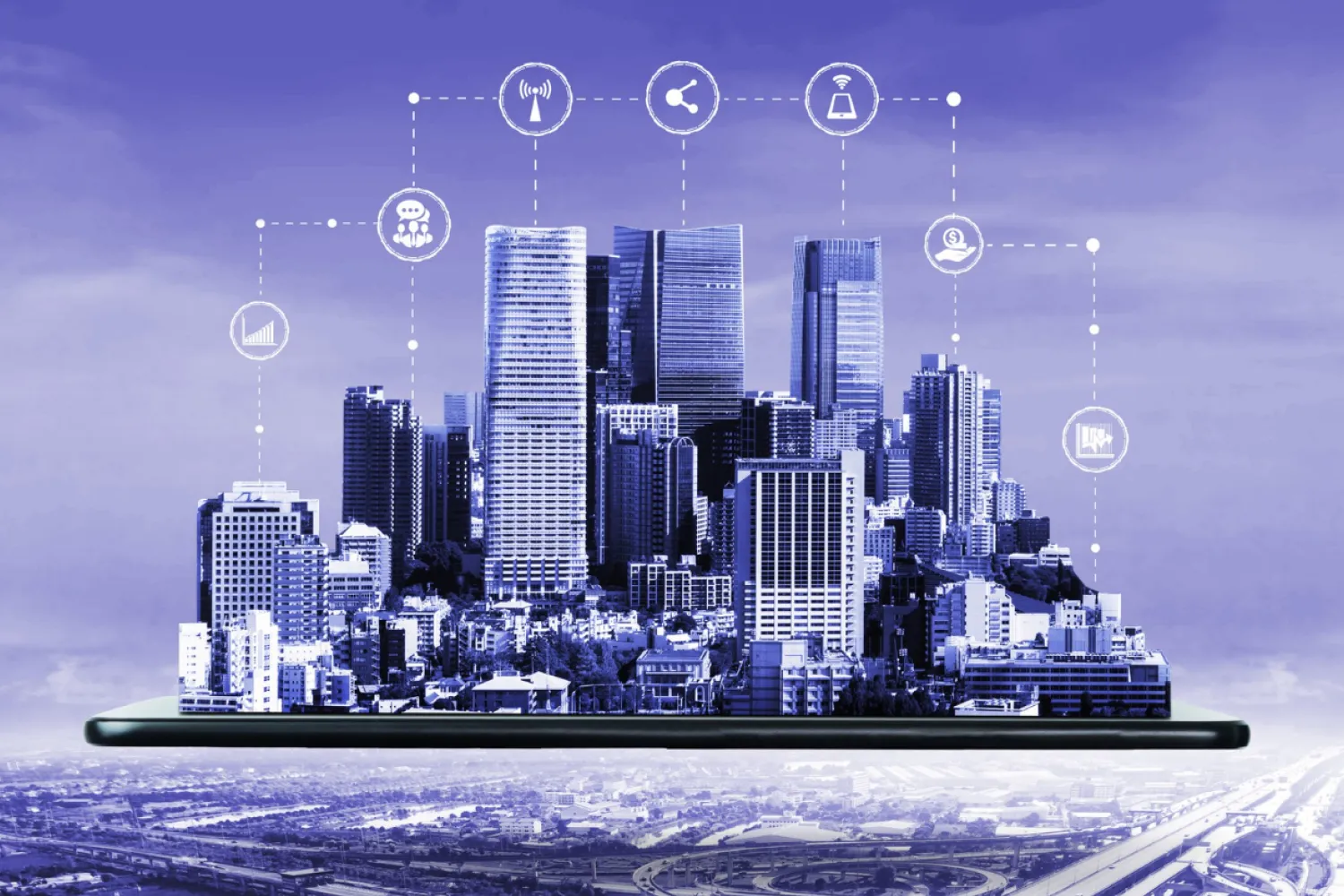
To grasp how to manage data security in smart facades, one must first dismantle the illusion that these systems are isolated from the broader digital ecosystem. A common misunderstanding is the “air-gap” myth—the belief that because a facade controller manages window tints, it is inherently sequestered from the internet. In reality, modern facades are frequently integrated into cloud-based analytics platforms to refine performance through machine learning, creating a continuous stream of data moving between the building and external servers.
Oversimplification often leads stakeholders to focus solely on encryption. While vital, encryption does not protect against a compromised credential or a “denial of service” (DoS) attack that freezes a building’s louvers during a high-wind event, potentially causing structural damage. True management involves a layered approach: securing the hardware at the edge, protecting the communication protocols, and auditing the human processes that govern access.
Another layer of complexity involves the multi-tenant nature of modern commercial real estate. If a smart facade tracks sunlight to adjust blinds for a specific floor, it is inadvertently collecting data on tenant behavior—when they arrive, which rooms they use, and their environmental preferences. Managing data security here isn’t just about preventing hacks; it’s about privacy governance and ensuring that the metadata generated by the building doesn’t become a liability for the inhabitants.
Deep Contextual Background: The Digital Transformation of the Building Skin
The evolution of the facade has moved from load-bearing masonry to the “curtain wall,” and finally to the “active skin.” Historically, building security focused on locks, cameras, and reinforced glass. The introduction of automation in the 1980s via simple timers for HVAC systems was the first step toward the modern smart building. However, these early systems were “dumb” in their connectivity—they operated on closed loops with minimal external exposure.
The shift occurred in the last decade with the explosion of the IoT. Sensors became cheap, and the desire for “Net Zero” buildings drove architects to seek every possible efficiency gain. The facade became the primary tool for this, using real-time data to mitigate solar heat gain. But as these systems became more sophisticated, the supply chain for their components became more global and opaque. A single smart glass controller might contain firmware developed by a third party, utilizing open-source libraries that haven’t been patched in years. This systemic evolution has outpaced the traditional construction industry’s ability to vet digital components, creating a legacy of vulnerable infrastructure.
Conceptual Frameworks and Mental Models
Understanding how to manage data security in smart facades requires specific mental models to navigate the complexity:
-
The “Defense in Depth” Model: Adapted from military and IT strategy, this framework assumes that no single security measure is foolproof. It layers physical security (locking control panels), network security (VLAN segmentation), and application security (strong authentication).
-
The CIA Triad (Confidentiality, Integrity, Availability): In the context of a facade, Availability is often the most critical. If a facade’s cooling logic is hacked and shut down in a desert climate, the building becomes uninhabitable within hours. Integrity ensures that sensor data (like wind speed) isn’t spoofed to trigger unnecessary emergency retract sequences.
-
The Zero Trust Architecture (ZTA): This model operates on the principle of “never trust, always verify.” Every device on the facade network, from a rooftop anemometer to a ground-floor light sensor, must be authenticated before it can communicate with the BMS.
-
The Shared Responsibility Model: Borrowed from cloud computing, this framework clarifies that while a vendor provides a secure “smart window,” the building owner is responsible for the secure configuration of the network it sits on.
Key Categories and Variations of Smart Facade Tech
Different facade technologies present unique security profiles. Understanding these distinctions is fundamental to developing a bespoke security plan.
| Facade Technology | Primary Data Interaction | Security Risk Level | Key Vulnerability |
| Electrochromic Glass | Low-bandwidth DC control signals | Moderate | Controller hijacking (forced tinting/clearing) |
| Automated Louvers | High-torque motor control; wind/sun sensors | High | Physical damage via “thrashing” commands |
| Integrated BIPV | Power output monitoring; inverter data | Moderate | Inverter firmware exploits; grid instability |
| Media Facades (LED) | High-bandwidth video data streaming | High | Content hijacking (unauthorized displays) |
| Double-Skin Cavity Fans | Airflow and temperature sensors | Low | Disruption of thermal regulation |
Decision Logic for Implementation
When choosing a system, the logic should follow a “Function-to-Risk” assessment. If a facade system provides a critical life-safety function (e.g., smoke exhaustion via automated vents), it must be placed on a more restrictive, hardened network than a system used purely for aesthetic lighting.

Detailed Real-World Scenarios
Scenario 1: The Sensor Spoofing Attack
An adversary targets a high-rise with automated sunshades. By using a high-intensity laser to spoof the light sensors on the facade, they trick the system into thinking it is peak noon in the middle of the night. The shades deploy, but the system’s logic conflicts with the wind sensors. The resulting “logic loop” causes the motors to overheat.
-
Constraint: The sensors were proprietary and didn’t support encrypted signals.
-
Second-Order Effect: Increased maintenance costs and premature motor failure across 500 units.
Scenario 2: Lateral Movement via the Facade
A hacker gains access to the building’s guest Wi-Fi, which happens to be improperly bridged to the BMS through a shared switch used by the smart facade’s weather station.
-
Decision Point: Should the building manager have invested in physical network segmentation (separate cabling)?
-
Outcome: The hacker moves from the facade controller to the tenant billing system.
Scenario 3: The Ransomware “Blackout”
Ransomware encrypts the server governing an electrochromic glass installation in a flagship hospital. The windows are stuck in “opaque” mode, plunging patient rooms into darkness and disrupting circadian rhythms.
-
Failure Mode: Lack of a manual “analog” override for the digital tinting system.
Planning, Cost, and Resource Dynamics
The financial burden of securing a smart facade is often hidden. It is not just the cost of software, but the “human-hour” cost of perpetual monitoring.
| Cost Category | Estimated Percentage of Project Budget | Frequency |
| Hardened Hardware | 5–10% premium over standard IoT | Initial Purchase |
| Network Segmentation | 2–3% of total IT build-out | Construction Phase |
| Third-Party Penetration Testing | $15,000 – $40,000 per audit | Annual/Bi-Annual |
| Firmware Patching/Labor | 1–2% of annual OpEx | Ongoing |
Opportunity Cost: Failing to secure a facade can lead to “uninsurability.” As cyber-insurance providers become more sophisticated, buildings without documented facade security protocols may face prohibitively high premiums.
Tools, Strategies, and Support Systems
Managing these risks requires a specialized toolkit:
-
VLAN Segmentation: Keeping facade traffic on a completely different logical network than corporate data.
-
Hardware Security Modules (HSM): Using dedicated chips for storing the cryptographic keys of the facade controllers.
-
Behavioral Analytics: Systems that flag “impossible” events, such as a window opening when the external temperature is -10°C.
-
Firmware Bill of Materials (SBOM): Demanding a list of all software components from the facade vendor to track known vulnerabilities.
-
Encrypted Protocols: Moving away from standard BACnet to BACnet/SC (Secure Connect).
-
Physical Port Security: Disabling unused Ethernet ports on facade controllers to prevent local tampering.
Taxonomy of Risk and Compounding Failures
Risk in smart facades is rarely isolated. It follows a compounding trajectory:
-
Tier 1: Individual Component Failure. A single sensor dies. Risk: Low.
-
Tier 2: Network-Level Compromise. An attacker gains “Read” access. Risk: Moderate (Data privacy concern).
-
Tier 3: Control-Level Hijacking. An attacker gains “Write” access. Risk: High (Physical damage/occupant discomfort).
-
Tier 4: Systemic Cascade. The facade failure triggers an HVAC overload, leading to a total building shutdown. Risk: Critical.
The compounding effect occurs when digital vulnerabilities meet physical stressors—for example, a cyber-attack during a hurricane or extreme heatwave.
Governance, Maintenance, and Long-Term Adaptation
Effective governance requires a “Cyber-Maintenance Manual” similar to a structural maintenance schedule.
-
Quarterly: Review access logs for the BMS facade module.
-
Biannually: Update firmware on edge controllers (after testing in a sandbox).
-
Annually: Rotate all cryptographic keys and service account passwords.
-
Every 5 Years: Assess the physical state of cabling and sensor enclosures for tampering or environmental degradation.
Measurement, Tracking, and Evaluation
How do you measure the success of managing data security in smart facades? It requires both quantitative and qualitative signals.
Leading Indicators:
-
Percentage of facade devices with current firmware.
-
Mean time to patch (MTTP) for discovered vulnerabilities.
-
Number of unsuccessful login attempts to the facade control interface.
Lagging Indicators:
-
Number of unauthorized configuration changes.
-
Duration of unplanned downtime for facade automation.
-
Cost of repairs attributed to “erratic” system behavior.
Common Misconceptions and Oversimplifications
-
“My building is too small to be a target.” Automated attacks don’t care about building height; they scan for vulnerable IPs.
-
“Proprietary systems are safer.” “Security through obscurity” is a fallacy; hackers can reverse-engineer proprietary protocols with ease.
-
“The facade is just windows; it can’t crash the network.” Any device on a network is a potential pivot point.
-
“Encryption solves everything.” Encryption doesn’t stop a valid user from making a catastrophic mistake.
-
“Wireless is inherently less secure than wired.” A poorly managed wired port in a public lobby is riskier than a properly encrypted, hidden SSID.
-
“Smart facades are a fire risk.” While electrical, the risk is usually digital logic failure rather than spontaneous combustion.
Ethical and Practical Considerations
There is an inherent tension between transparency and security. For a building to be truly “smart,” it needs to share data with the city’s power grid or other buildings. However, this transparency increases the attack surface. Ethically, building owners must consider the “Data Sovereignty” of their tenants. Who owns the data of a person standing behind a smart window? If the facade tracks occupancy to save energy, that data must be anonymized and purged regularly to prevent it from becoming a tool for surveillance.
Conclusion
The transition to intelligent building envelopes is an irreversible trend driven by the urgent need for environmental sustainability. However, the physical resilience of these structures is now inextricably linked to their digital integrity. Mastering how to manage data security in smart facades is not a one-time configuration but a perpetual cycle of assessment, hardening, and adaptation. By treating the facade as a critical network endpoint, architects and engineers can ensure that the “skin” of our future cities remains a protector, not a liability. The goal is a building that is not only smart enough to respond to the sun but secure enough to withstand the shadows of the digital age.