How to Prevent Smart Facade Control Errors: A Definitive Editorial Guide
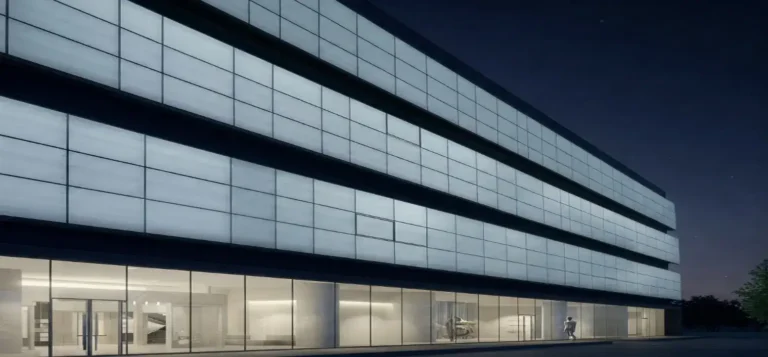
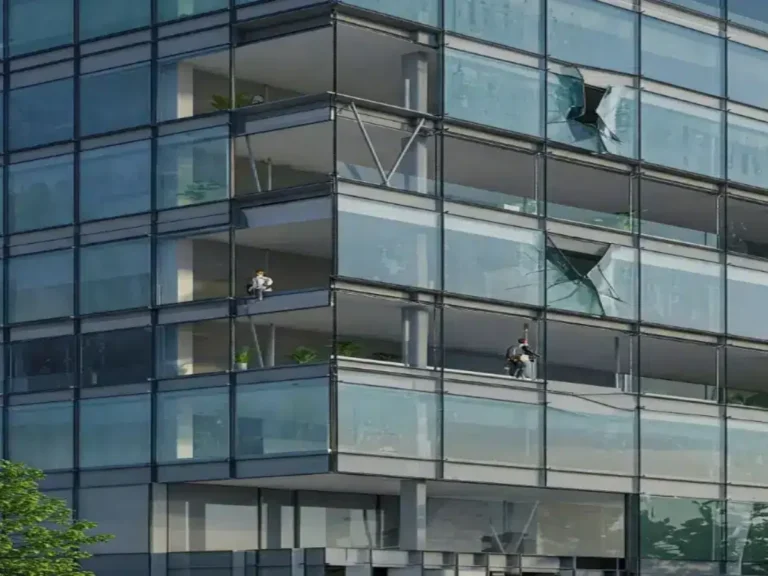
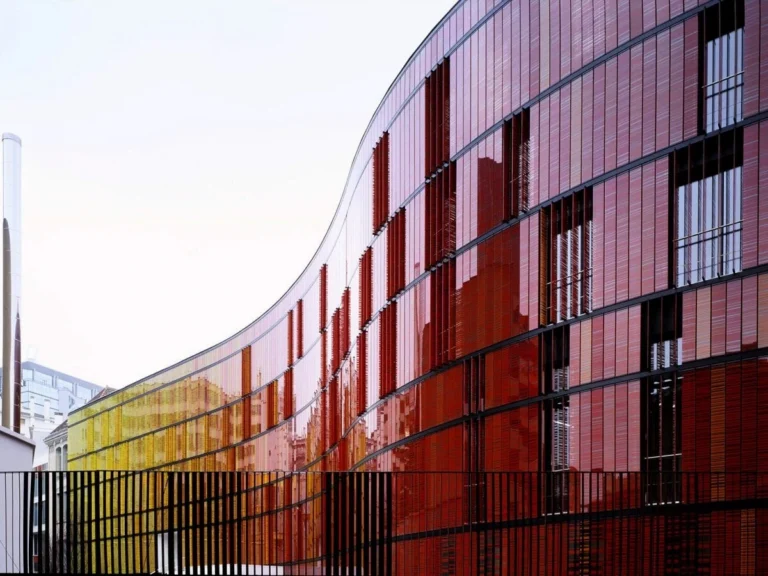
The modern building envelope has evolved from a static weather barrier into a complex, high-performance machine. As architects strive for carbon neutrality and enhanced occupant well-being, the “smart facade”—equipped with automated louvers, electrochromic glazing, and phase-change materials—has become a cornerstone of contemporary design. Yet, the intelligence of these systems is only as robust as the control logic governing them. When a facade fails to respond correctly to environmental stimuli, the consequences range from minor glare discomfort to catastrophic energy waste or even structural damage to kinetic components.
Control errors in responsive skins are rarely the result of a single catastrophic hardware failure. Instead, they typically emerge from the friction between disparate subsystems: the Building Management System (BMS), localized weather stations, and the internal lighting controls. These errors manifest as “hunting”—where louvers oscillate fruitlessly in search of a setpoint—or as “shadow blindness,” where the system ignores reflections from neighboring glass towers. Managing these complexities requires a transition from simple automation to sophisticated orchestration.
To address these challenges, engineers and facility managers must adopt a forensic approach to system architecture. It is no longer sufficient to install proprietary hardware and assume the factory settings will suffice for the unique microclimate of an urban canyon. This article provides a comprehensive investigation into the systemic causes of operational drift and provides a rigorous framework for maintaining the digital and physical integrity of the building skin over its multi-decade lifecycle.
H2: Understanding “how to prevent smart facade control errors.”
A control error is fundamentally a breakdown in the feedback loop: the system receives data, interprets it through a set of rules, and issues a command. If the data is noisy, the rules are rigid, or the command is physically impossible to execute due to mechanical wear, an error occurs.
A common misunderstanding in the industry is that “smarter” algorithms—those involving machine learning or complex heuristic models—are inherently more reliable. In many cases, the opposite is true. Complexity often introduces “black box” logic, where it becomes impossible for a facility manager to understand why a North-facing facade is tinting on a cloudy day. True prevention lies in “transparency of logic,” where the control hierarchy is clearly defined, and the system’s decisions are auditable.
Oversimplification risks also abound in the reliance on single-point sensors. If a building relies on one rooftop anemometer to control wind-safety retracts for a thousand individual motorized shades, a localized gust or a sensor calibration drift can trigger a building-wide error. Preventing these errors requires a decentralized approach where sensor fusion—combining data from multiple local and remote sources—creates a “consensus” before any physical movement is initiated. This creates a buffer against the chaotic variables of the urban environment.
The Systemic Evolution: From Mechanical Timers to Neural Networks
The history of facade control reflects the broader history of industrial automation. The earliest “active” envelopes of the 1960s and 70s relied on analog timers. These were robust but dumb; they could not account for a late-season heatwave or a sudden thunderstorm. The introduction of the Direct Digital Control (DDC) in the 1980s allowed for basic “If-Then” logic, but these systems remained siloed from the building’s thermal heart—the HVAC system.
Today, we are in the era of integrated predictive control. Modern facades are no longer just reacting to the sun; they are anticipating it. They ingest real-time weather feeds, occupant calendar data, and utility price signals to decide when to harvest solar heat and when to reject it. However, this increased connectivity has widened the “error surface.” A software update in the cloud or a change in a third-party API can now theoretically paralyze a building’s skin. Understanding this historical trajectory helps us realize that modern errors are as much about data governance as they are about mechanical engineering.
Conceptual Frameworks for Error-Free Logic
To maintain the operational health of a responsive skin, several mental models are essential:
-
The “Deadband” Framework: This model focuses on the threshold of movement. To prevent “hunting,” engineers must define a wide enough deadband—the range in which the system remains at rest—to prevent micro-adjustments that cause mechanical fatigue and control loops.
-
The “Safety-First” Hierarchy: This framework dictates that safety commands (wind retract, fire smoke-out) must physically bypass all “comfort” commands (glare control, thermal gain) at the controller level, not just the software level.
-
The “Digital Twin” Validation: Before a control sequence is pushed to the live facade, it should be run against a digital twin—a virtual model of the building’s physics—to see if the command leads to “thermal shock” or excessive energy consumption.
-
The “Fallback” Model: This assumes the network will eventually fail. It dictates that every smart component must have a “locally stored” default state (e.g., 50% tint) that it reverts to if it loses communication with the master server.
Categories of Control Architectures and Their Vulnerabilities
The choice of control architecture determines the types of errors a building will likely face. No system is perfect; each has a specific trade-off profile.
| Architecture Type | Logic Distribution | Primary Benefit | Typical Error Mode |
| Centralized BMS | Single master server | Easy to monitor; unified data | Single point of failure; network latency |
| Distributed Edge | Intelligence at the window/motor | High resilience; fast response | “Conflicting logic” between adjacent zones |
| Cloud-Based AI | Remote server processing | Predictive power; easy updates | Connectivity dependency; “Black Box” logic |
| Manual-Priority | Human override takes precedence | High occupant satisfaction | “Set-and-forget” errors (shades left down) |
| Sensor-Only Loop | No external data; reacts to light | Lowest cost; simple install | Falsely triggered by reflections/artificial light |
Realistic Decision Logic
For a high-rise in a dense urban center, the most robust architecture is often a “Distributed Edge” system with a “Centralized Overseer.” This allows individual windows to react to local reflections immediately, while the central server ensures that the overall energy strategy of the building isn’t compromised by a single rogue sensor.
Detailed Real-World Scenarios
Scenario 1: The Reflection Paradox
In a city with many glass towers, a South-facing facade receives “double sun”—one direct and one reflected from a neighbor. The light sensor is blinded, reading values higher than the sun’s physical constant.
-
Failure: The system enters an “Error State” because the data seems impossible.
-
Outcome: The louvers default to an open position, causing 120°F (49°C) internal temperatures.
-
Solution: Applying a “Cap-and-Verify” logic where sensors are cross-checked against astronomical solar position data.
Scenario 2: The “Ghost” Occupant
A building uses PIR (Passive Infrared) sensors to adjust shading based on occupancy. On a weekend, the cleaning crew moves through the building.
-
Failure: The facade reacts to the cleaning crew as if the building is at full capacity, deploying shades and raising lights.
-
Second-Order Effect: Significant energy waste and premature motor wear.
-
Solution: Logic that differentiates between “Transient” and “Static” occupancy using dwell-time filters.
Scenario 3: Mechanical Latency in Cold Climates
In a Northern city, a sudden ice storm coats the external louvers. The control system issues a command to rotate for the morning sun.
-
Failure: The motor detects high resistance and shuts down, but the software thinks the louver has moved.
-
Result: The system’s “Feedback Loop” is broken; it is now operating on a false reality.
-
Solution: Implementing “Current-Sensing” motor feedback that alerts the BMS specifically of a “Physical Obstruction Error.”
Planning, Cost, and Resource Dynamics
The financial burden of preventing errors is often front-loaded in the “Commissioning” phase. Cutting costs here leads to exponential increases in operational expenses later.
| Resource Category | Estimated Cost | Impact on Error Prevention |
| Logic Verification (Commissioning) | 2–5% of the total facade cost | Critical (Catches 90% of initial errors) |
| Redundant Sensor Arrays | $200 – $500 per zone | High (Prevents sensor-drift errors) |
| Annual Software Maintenance | $5,000 – $20,000 | Essential (Prevents “Bit Rot” and API breaks) |
| Occupant Training/Manuals | $1,000 – $3,000 | Low (Reduces “Frustration Overrides”) |
The Opportunity Cost: A poorly controlled facade can increase a building’s cooling load by 20–40%. Over 10 years, the cost of these errors often exceeds the entire capital expenditure of the control system itself.
Tools, Strategies, and Support Systems
To systematically reduce errors, technical teams should deploy a multi-layered defensive suite:
-
BACnet/SC (Secure Connect): Ensuring that control commands cannot be intercepted or spoofed by malicious actors.
-
Solar Tracking Software: Providing a “mathematical sun” to compare against the “physical sun” measured by sensors.
-
Fault Detection and Diagnostics (FDD): Algorithms that look for patterns of error—such as a motor that draws slightly more current every month, indicating a coming mechanical failure.
-
Hardware-in-the-Loop (HIL) Testing: Testing the actual physical controllers against a simulated environment before installation.
-
Remote Telemetry: Allowing the manufacturer to diagnose errors without needing a crane or davit system to reach the facade.
-
Semantic Tagging (Project Haystack): Ensuring that the data from the facade is labeled correctly so the BMS doesn’t confuse a “Wind Speed” signal with a “Light Level” signal.
Risk Landscape and Failure Modes
Risk in smart facades follows a “Swiss Cheese” model: errors occur when holes in different layers of defense align.
-
Tier 1: Input Errors. Dirty sensors, shadowed sensors, or network packets dropped.
-
Tier 2: Logic Errors. Conflicting setpoints (e.g., HVAC trying to heat while the facade is trying to cool).
-
Tier 3: Execution Errors. Motor jams, frozen hinges, or lost power.
-
Tier 4: Human Errors. Facility managers change a setpoint “just for today” and forget to change it back.
The most dangerous failure is “Mode Confusion,” where the operator thinks the system is in “Manual” but it is actually in “Automatic,” leading to unexpected movements during maintenance.
Governance, Maintenance, and Long-Term Adaptation
A “Digital O&M” (Operations and Maintenance) manual is required:
-
Quarterly “Setback” Reviews: Checking if the occupancy schedules in the BMS match the actual tenant usage.
-
Bi-Annual Sensor Calibration: Using a handheld meter to ensure the facade sensors haven’t drifted.
-
Adjustment Triggers: A formal process for when a control error is reported. Instead of just “resetting” the system, a “Root Cause Analysis” (RCA) must be performed to see if the logic needs permanent adjustment.
Measurement, Tracking, and Evaluation
Leading Indicators:
-
Duty Cycle of Motors: Are the motors running more than 5 minutes per hour? If so, the deadband is too narrow.
-
Network Latency: Is the time between “Sensor Read” and “Motor Action” increasing? This suggests a bogged-down BMS.
Lagging Indicators:
-
Energy Variance: Deviation from the “Predicted Energy Model” of the building.
-
Override Count: The number of times tenants used a manual wall switch to correct the automation.
Documentation Examples:
-
Logic Flowcharts: A visual map of what happens when a sensor fails.
-
Event Logs: A chronological record of every command issued by the controller, used for forensic auditing after a thermal event.
Common Misconceptions and Oversimplifications
-
“The manufacturer’s logic is perfect.” Every site has unique reflections and wind patterns that the factory cannot predict.
-
“Wireless is just as good as wired for control.” For high-rise facades, the interference from internal Wi-Fi and structural steel makes wired (RS-485 or Ethernet) much more reliable for control signals.
-
“AI will figure it out.” AI often learns the wrong thing—like learning to close shades when a shadow from a cloud passes, leading to excessive wear.
-
“The BMS handles the facade.” Most BMS systems are optimized for slow-moving thermal masses (air), not fast-moving light/glare events. A dedicated facade controller is almost always superior.
-
“More sensors = more accuracy.” More sensors just create more data to manage. Five well-placed sensors are better than 50 poorly placed ones.
-
“Maintenance is just for the motors.” Maintenance of the code and the calibration is just as important as the grease in the gears.
Ethical and Practical Considerations
There is a “Duty of Care” involved in facade control. If a system error leads to excessive glare in a workspace, it can cause eye strain and migraines for workers. If an error leads to a window being stuck in “clear” mode in a residential tower, it compromises the privacy of the inhabitants. Control errors are not just technical bugs; they are disruptions to the human-environment relationship. Designers must ensure that there is always an “Analog Exit”—a way for a human to physically intervene if the digital logic fails them.
Conclusion
The evolution of the building envelope into a dynamic, responsive skin is an essential step toward a sustainable future. However, the sophistication of these systems demands a commensurate level of operational rigor. By embracing redundancy, prioritizing logic transparency, and committing to lifelong system governance, we can ensure that our buildings remain as intelligent in practice as they are in theory. The facade of the future must not only be “smart”—it must be wise enough to handle its own complexity.